
Coconut Rhinoceros Beetle Control: Symptoms, Prevention, and Effective Insecticide Guidelines
The coconut tree is often called the “Tree of Heaven” because every part of it is useful to humans. However, this beneficial tree has a dangerous enemy — the **Coconut Rhinoceros Beetle** (also known as Gandar or Gobor Poka). An attack by this pest can quickly kill even a healthy coconut tree. Let’s learn in detail about this harmful insect.
🐛 What is the Coconut Rhinoceros Beetle?
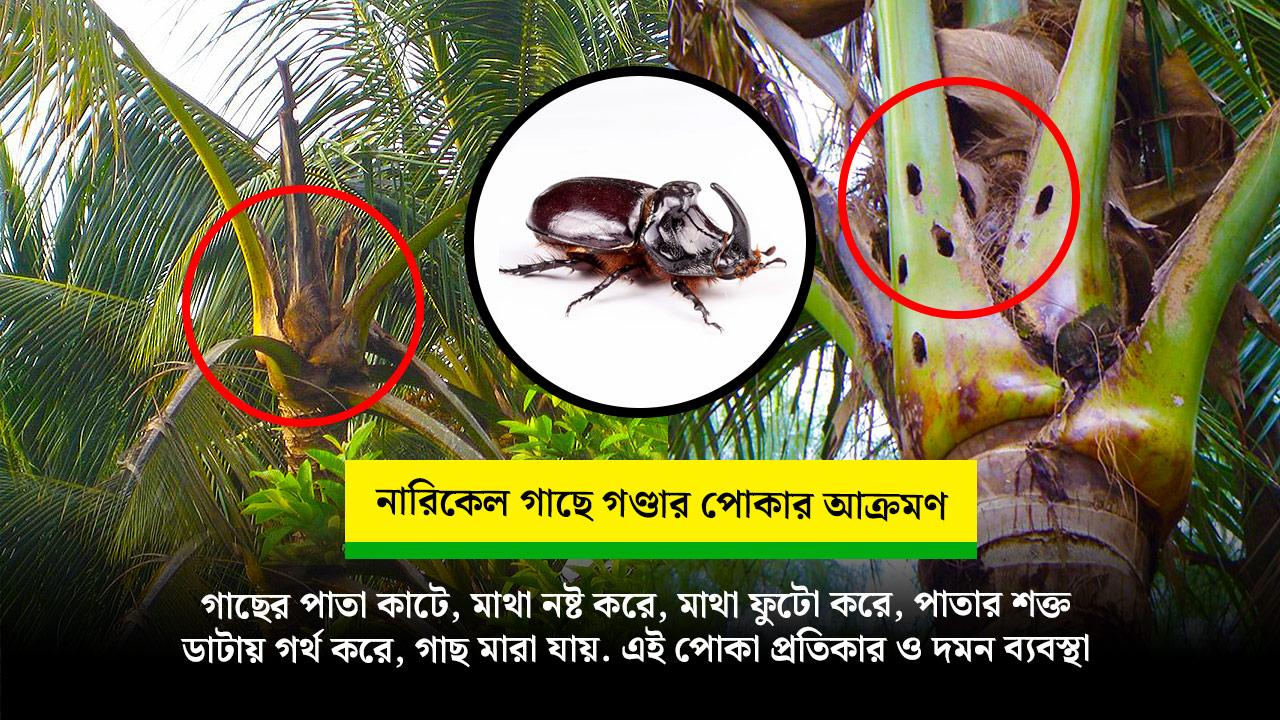
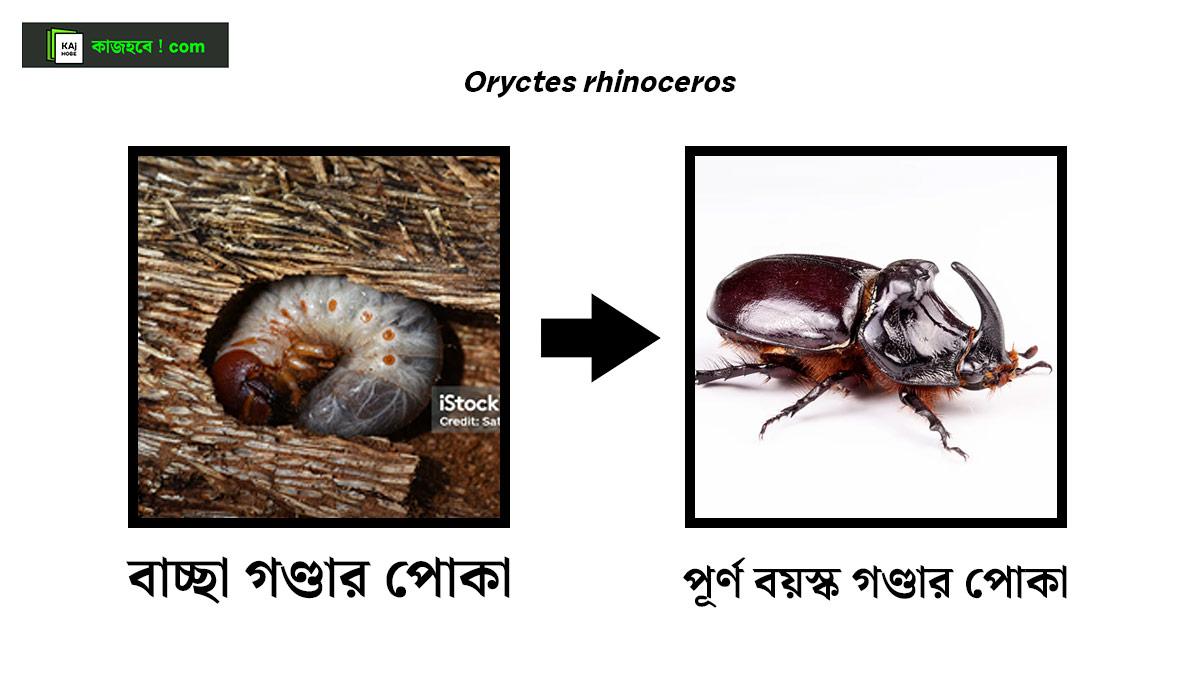
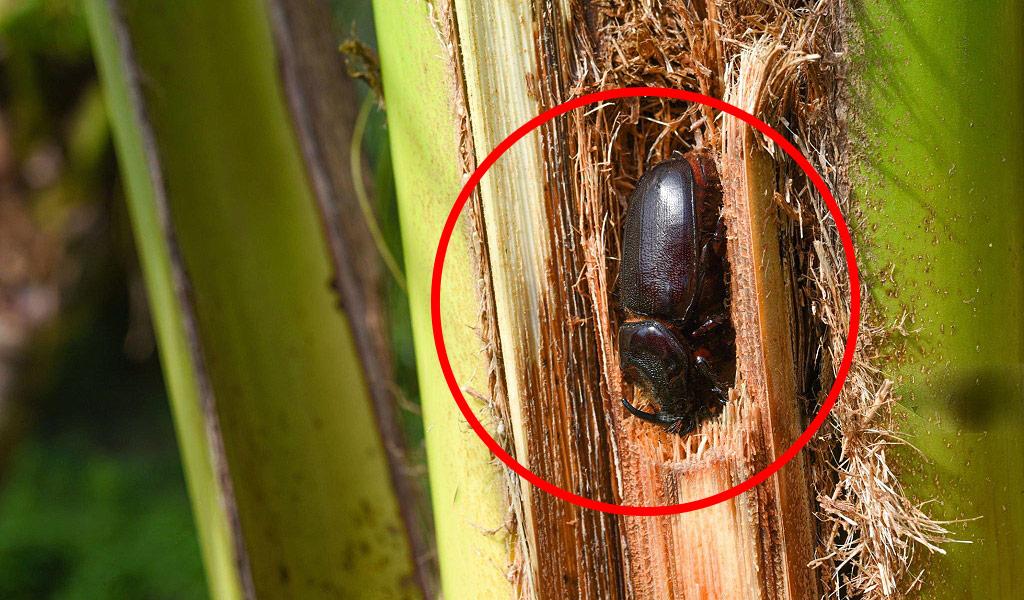
The Coconut Rhinoceros Beetle (scientific name: Oryctes rhinoceros) is a large scarab beetle. It has a shiny black or dark brown body. The most distinctive feature is the horn-like structure on its head, which resembles a rhinoceros horn.
- Size: About 35–50 mm (1.5–2 inches)
- Identification: Prominent horn on the head and a hard-shelled body
Origin: Native to Southeast Asia, but now widespread in many coconut-growing regions of the world.
When and How Does It Attack Coconut Trees?
The adult beetle mainly attacks coconut trees. It is active during evening and night. During the day, it hides in decaying wood, compost, or at the base of the tree.
- Active Season: Most active from the rainy season to winter (July–December).
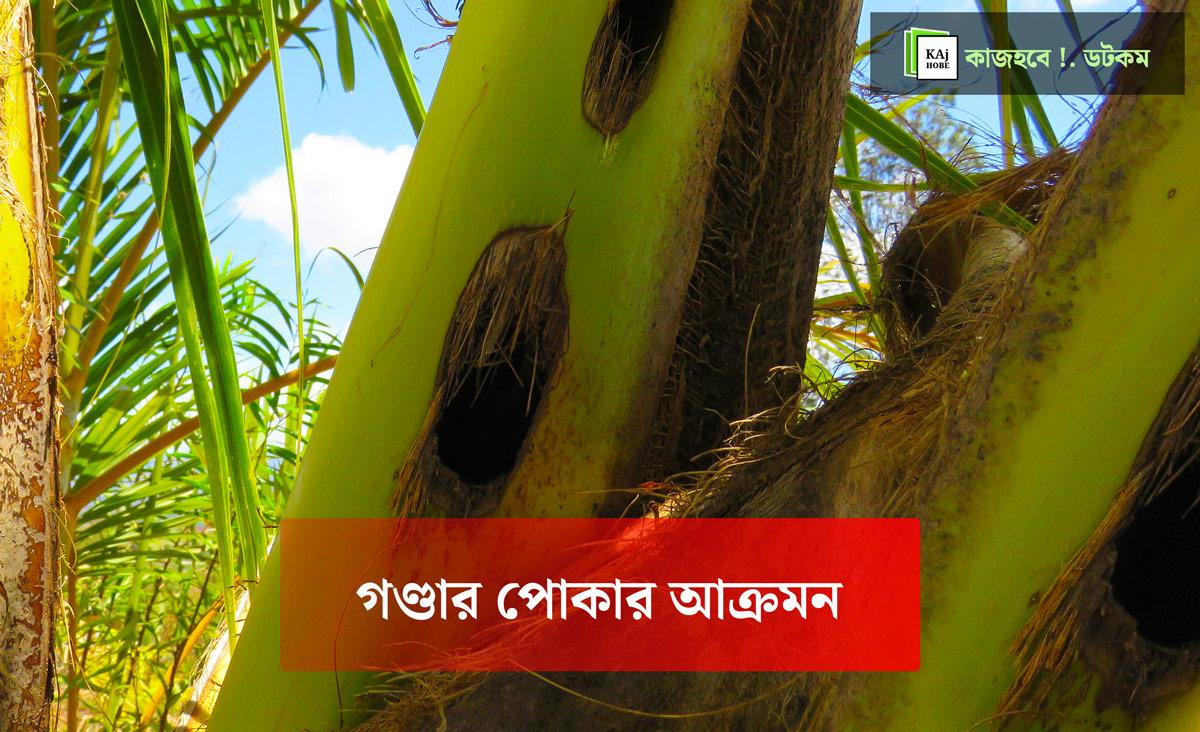
- Attack Method: The beetle climbs the trunk, enters the tender crown (growing point), and bores into the soft tissues, creating tunnels. This severely damages the tree.
What Kind of Damage Does It Cause?
The damage caused by this beetle is highly destructive. Key symptoms include:
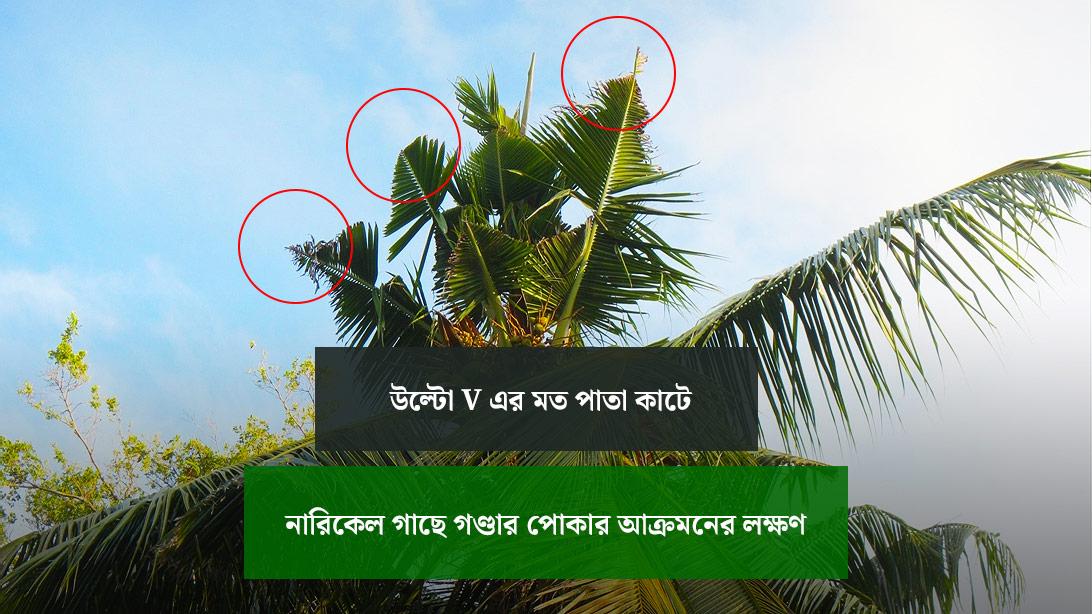
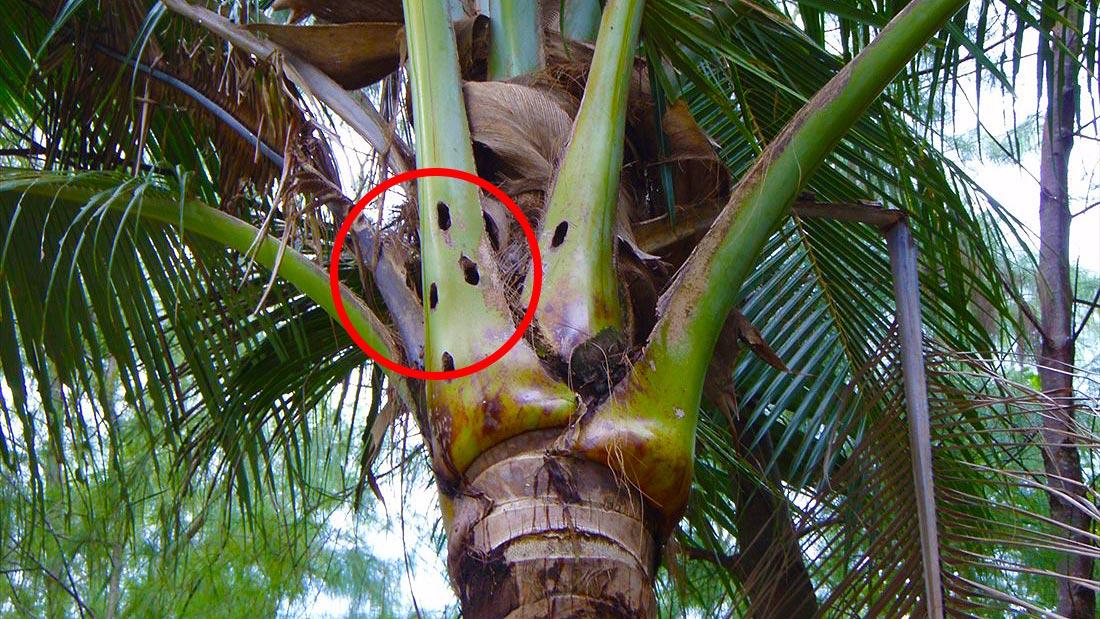
- Circular holes in the fronds: When the attacked leaves fully open, you can see round black holes — the easiest way to identify the pest.
- Torn and shredded leaves: Leaves break easily even in light wind and fall off. The tree looks ragged, with V-shaped cuts on the leaflets.
- Distorted trunk: Repeated attacks can cause the trunk to bend or deform.
- Reduced yield: The tree fails to produce new leaves, flowers, or nuts, leading to drastic yield loss.
- Tree death: If the central growing point (crown) is heavily damaged, the tree may die completely. Young trees are especially vulnerable.
How to Prevent the Coconut Rhinoceros Beetle?
Prevention is the most effective strategy. Here are some practical preventive measures:
- Maintain cleanliness: Keep the crown and garden clean. Do not leave piles of decaying wood, compost, or manure near the trees.
- Biological control: Use beneficial fungi such as Metarhizium anisopliae (e.g., Lycomax). It kills both larvae and adult beetles and is environmentally safe.
- Light traps: Light traps can attract and kill adult beetles at night (limited effectiveness in large plantations).
Chemical Control – Effective Insecticides
When infestation is severe, chemical insecticides are needed. The following are proven effective:
- Chlorpyrifos: Mortar 48 EC, Traf 48 EC
- Cypermethrin: Mesi 10 EC, Cyperin 10 EC
- Lambda Cyhalothrin: Shutdown 20 EC, Boxer 2.5 EC, Jaguar 2.5 EC, Decis 2.5 EC
- Imidacloprid: Gain 20 SL, Impel 20 SL, Imitaf 20 SL
For quick results, use Chlorpyrifos, Cypermethrin, or Lambda Cyhalothrin-based insecticides.
Correct Spraying Method:
- Spray in the late afternoon or evening when the beetles are most active.
- Thoroughly spray the crown (growing point) — the main attack site.
- If the tree is tall, climb and pour the solution directly into the crown.
- Ensure the insecticide reaches the beetles inside the tunnels.
- Always follow safety instructions and wear protective gear.
Important Advice: Always try biological and mechanical methods (traps, manual collection) first. Use chemical insecticides only as a last resort, as they can harm the environment and beneficial insects like bees.
Advice for Farmers
- Regularly inspect the crown of coconut trees.
- Use bio-pesticides like Lycomax (Metarhizium anisopliae) — it controls the beetle and helps keep the soil healthy.
Conclusion
The Coconut Rhinoceros Beetle is a serious threat to coconut cultivation. However, with awareness, regular monitoring, and proper management, it can be effectively controlled. Follow the prevention and control methods mentioned above to keep your coconut garden healthy and productive. “Proper care keeps your coconut trees green and full of fruit.”