

🌱 Weed Control Methods in Peanut Crop (Complete Guide)
Peanut is an important cash crop in Bangladesh. But in reality, many farmers use good quality seeds, fertilizer, and irrigation properly, yet fail to achieve expected yield only due to weeds. Weeds are a silent enemy that is visible, but often ignored, causing major damage.

If weeds are not properly controlled in a peanut field, plant growth is affected, fewer pods are formed, and yield decreases significantly. Therefore, weed control is not just a task—it is one of the most important conditions for successful cultivation.
One of the biggest problems in peanut farming is weed management. Often, even when good fertilizer and irrigation are applied, yield can drop by 30–60% only due to weeds. That is why timely and proper weed control is very important.

🌾 Weeds found in peanut fields
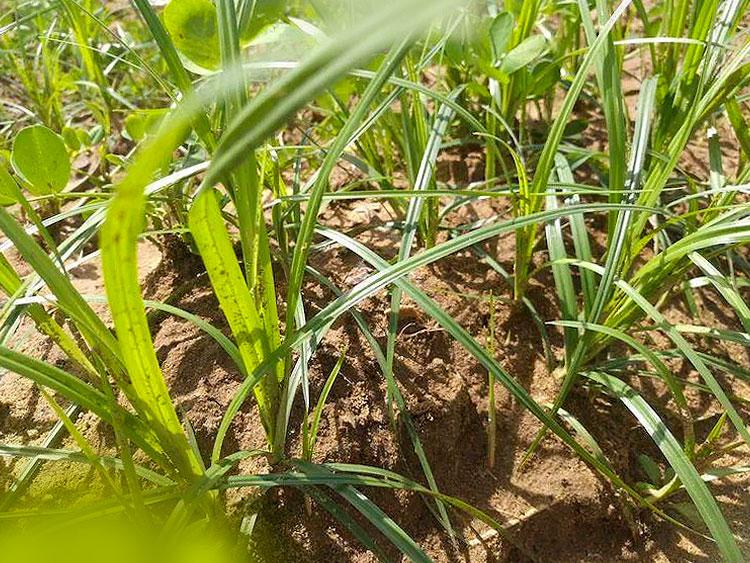
Generally, three types of weeds are found in peanut fields:
1. Grassy weeds
- Bermuda grass
- Barnyard grass
- Goosegrass
- Knotweed grass
👉 These grow quickly and consume a lot of nutrients
2. Broadleaf weeds
- Thorn apple weed
- Wild gourd
- Blue grass weed
3. Sedge
- Nut grass
🛠️ Main 2 methods of weed control
There are mainly 2 methods of weed control in peanut fields
- Manual hand weeding
- Herbicide application
Details are explained below:
1. Manual hand weeding (Weed control by hoe or hand weeding)
Manual hand weeding is the most common and safest method. Usually, the first weeding is done 15–20 days after sowing peanuts, because weeds start growing rapidly at this stage and compete with the crop. Then a second weeding is done within 30–35 days to keep the field mostly weed-free and support good plant growth.
This method removes weeds with their roots, reducing chances of regrowth. It is especially effective in small fields or where weed pressure is low. It is also environmentally safe as no chemicals are used, helping maintain soil health.
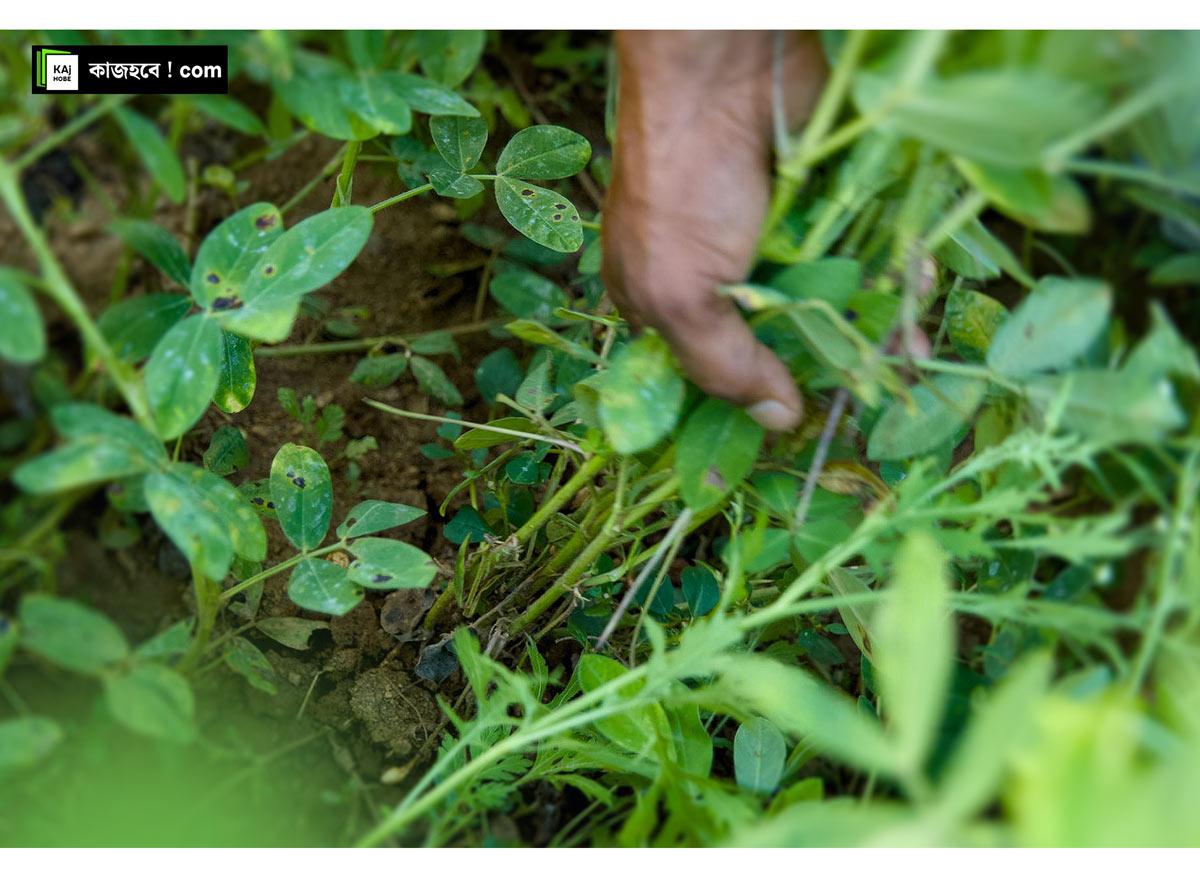
“However, a major limitation of this method is that it requires a lot of labor and time, and costs are high. Also, due to labor shortages in many areas, it becomes difficult to use this method alone in large fields. Therefore, many farmers prefer other methods instead.”
When to do?
- First weeding: within 15–20 days after sowing peanuts
- Second weeding: within 30–35 days after sowing peanuts
Advantages:
✔ Selective weed removal possible
✔ Overcrowded plants can be adjusted by thinning
✔ Soil becomes loose and aerated, improving water and nutrient penetration and slightly improving plant growth
✔ No chemical use, so soil fertility is maintained
✔ Provides employment opportunities for local laborers
Disadvantages:
❌ Requires a lot of time, labor, and money, reducing profit
2. Herbicide application
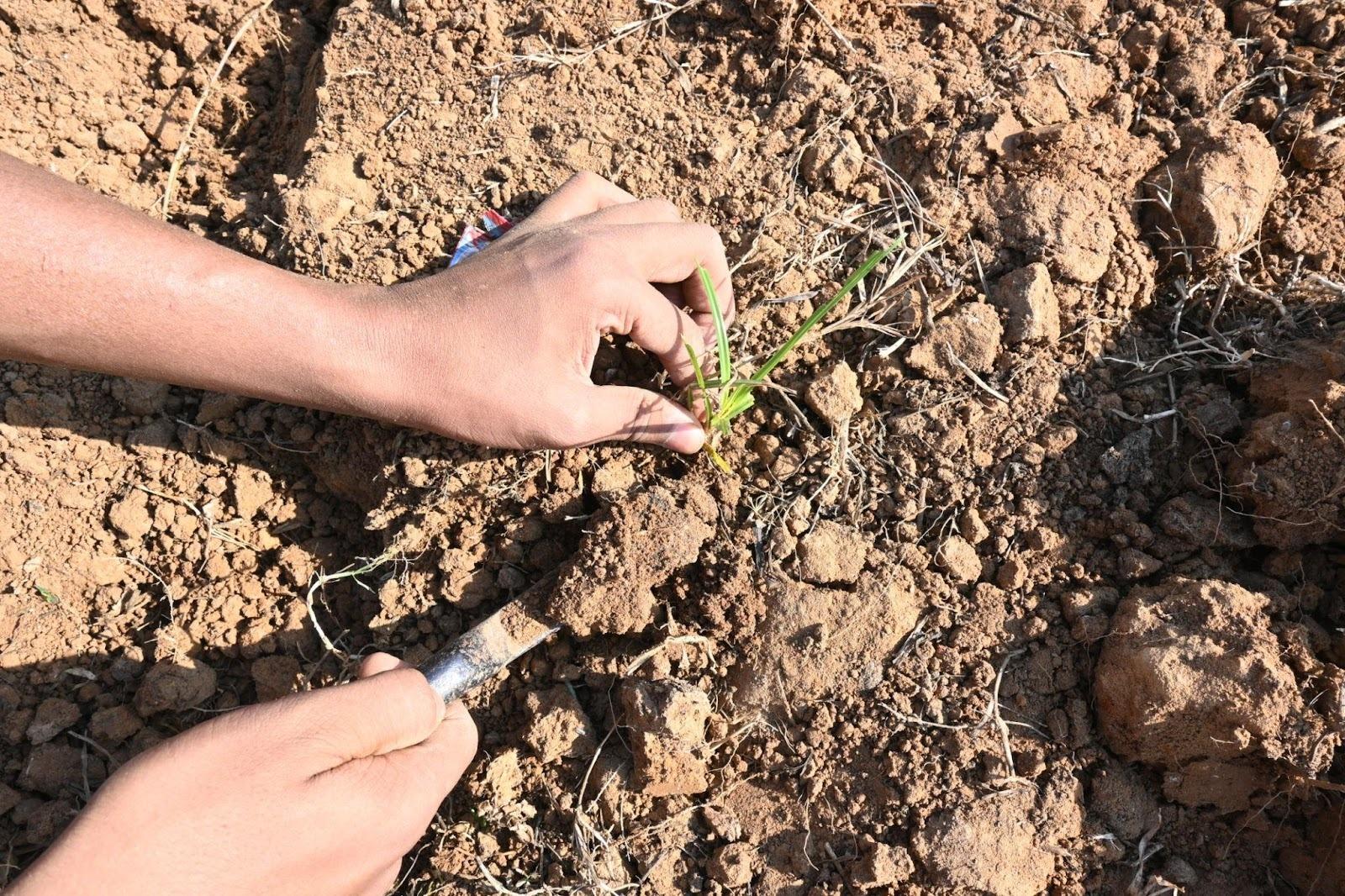
The fastest and most effective method of weed control in peanut fields is herbicide use. Due to labor shortages and rising costs, many farmers rely on this method. If applied correctly at the right time, most weeds can be controlled quickly while maintaining normal crop growth.
Herbicides are generally applied in two stages:
Pre-emergence (before weed germination):
- Applied before weeds emerge.
- Should be applied within 2–3 days after sowing peanuts.
- Pendimethalin-based herbicides are used to prevent weed germination in peanut fields.
Post-emergence (after weeds have grown):
- Applied when weeds are 15–25 days old or at 2–4 leaf stage.
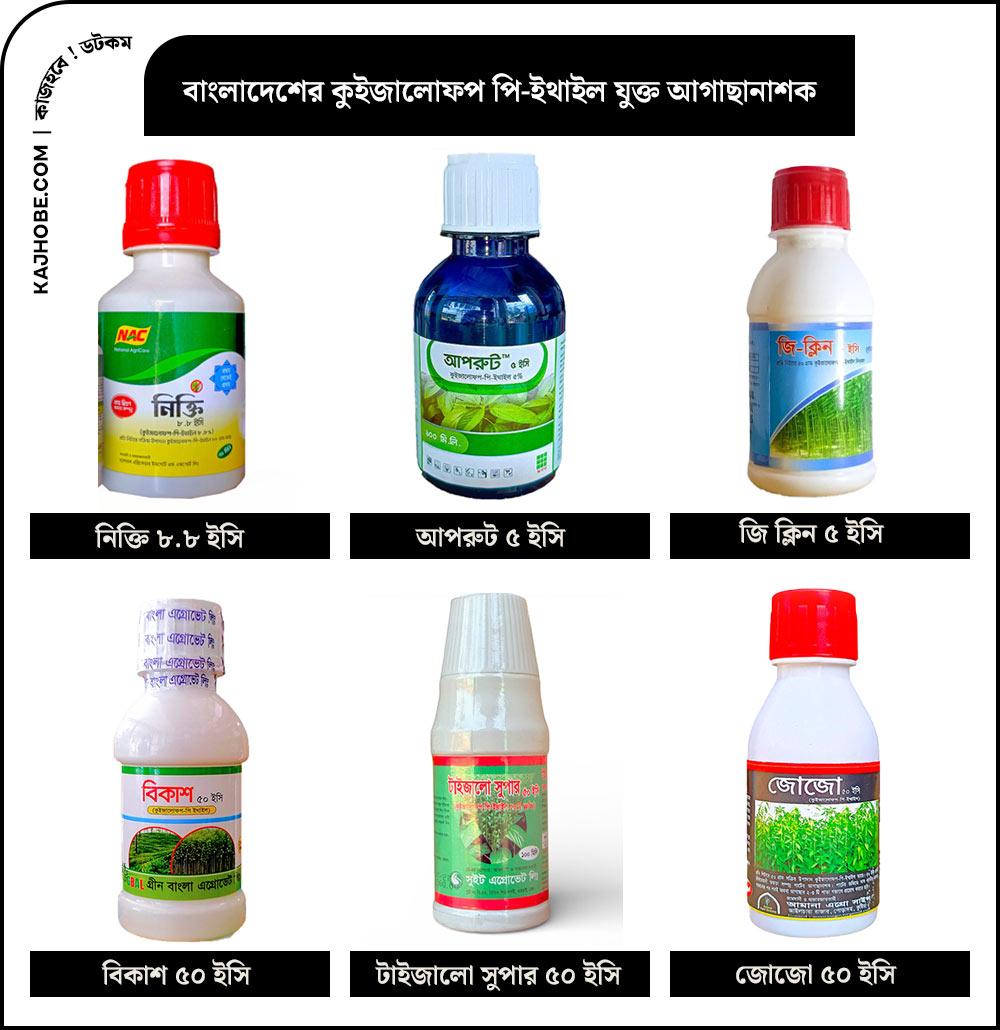
- Herbicides containing Quizalofop P-ethyl (e.g., Nikti 8.8 EC, Uproot 5 EC, G Clean 5 EC, Bikash 50 EC) are used. These are highly effective against grassy weeds and safe for peanut plants.
Proper timing and correct dosage are crucial; otherwise expected results will not be achieved.
Pre-emergence herbicide application (weed control before germination)
The main goal is to prevent weeds from germinating. Seeds should be properly covered with soil. Within 1–4 days after sowing, Pendimethalin herbicide should be sprayed on the soil surface, followed by irrigation. It forms a protective layer that prevents weed seed germination.
Herbicide names in Bangladesh (Pendimethalin):
- Panida 33 EC (Auto Crop Care Ltd.)
- Dafa 33 EC (Intefa)
- Penthallin 33 EC (Sweet Agrovet Ltd.)
- Pendulum 33 EC (ACI)

Which weeds it controls:
Grassy weeds:
Barnyard grass, Jungle ricegrass, Goosegrass, Bermuda grass, Crabgrass, Cogon grass
Broadleaf weeds:
Amaranthus spp., Chenopodium album, Trianthema spp., and others
Less effective on:
Nut grass (Cyperus rotundus), rhizome-based weeds
When to apply?
- 2–3 days after sowing (pre-emergence spray)
Advantages:
✔ Saves time and labor
✔ Easy for large fields
Disadvantages:
❌ Incorrect dosage may harm crops
❌ Repeated use may cause resistance
❌ Rain reduces effectiveness
❌ Chemical safety precautions required
Post-emergence herbicide application (control of already grown weeds)
This method controls weeds that have already emerged, ensuring space, light, and nutrients for the crop. It is usually applied 15–20 days after sowing or when weeds are at 2–4 leaf stage.
Application method:
- For grassy weeds within 15–25 days after sowing, use Quizalofop P-ethyl herbicides.
- Spray evenly so it contacts weeds but does not harm peanut plants.
- Best results are achieved when soil is slightly moist.
Herbicide names in Bangladesh (Quizalofop P-ethyl):
- Nikti 8.8 EC
- Uproot 5 EC
- G Clean 5 EC
- Bikash 50 EC
- Jojo 50 EC
- Senjola-5 EC
- Taizalo Super 50 EC
Effective weeds:
Grassy weeds:
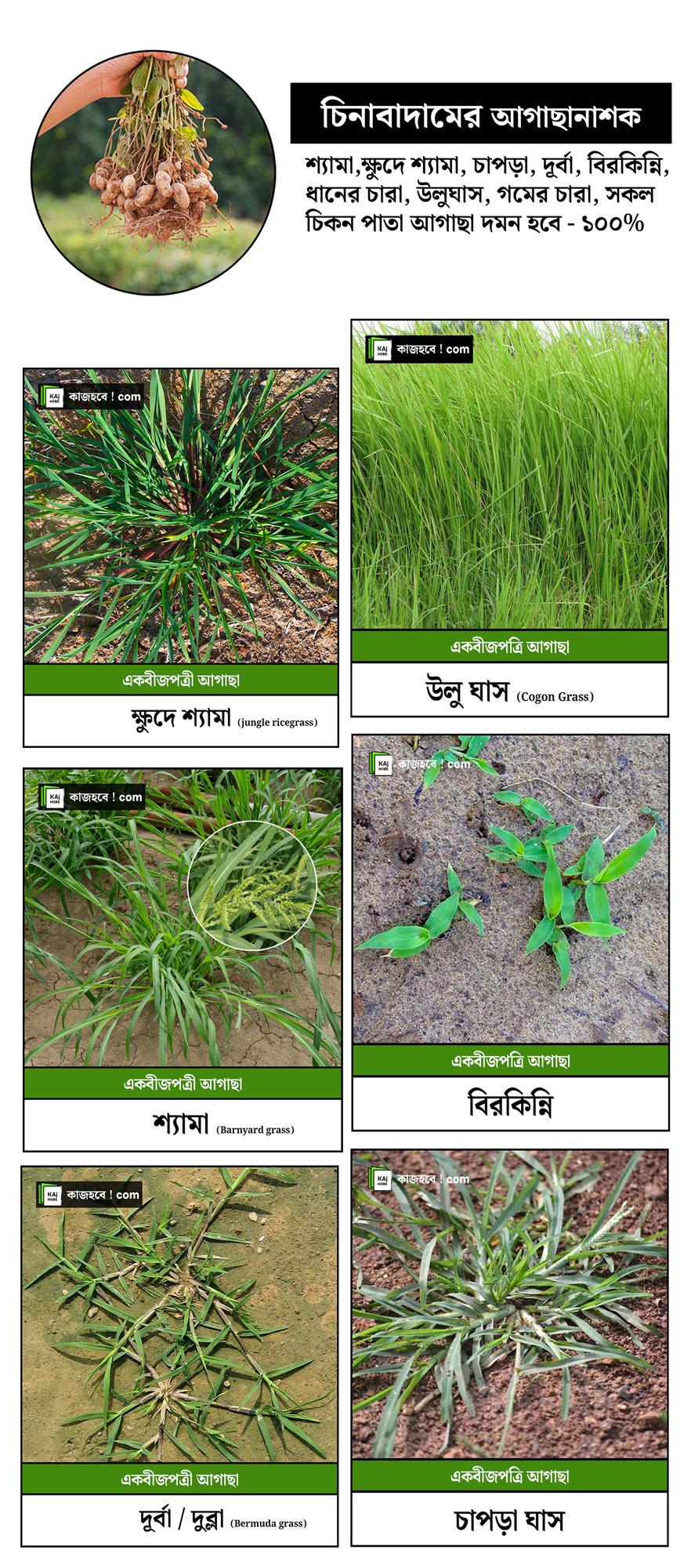
Barnyard grass, Jungle ricegrass, Goosegrass, Bermuda grass, Crabgrass, Cogon grass
Not effective on:
Broadleaf weeds, nut grass, rhizome-based weeds
Advantages:
✔ Quickly controls grassy weeds
✔ Maintains crop growth and yield
✔ Saves time, labor, and cost
Warnings:
❌ Incorrect dosage reduces effectiveness
❌ Repeated use causes resistance
❌ Rain reduces effectiveness
❌ Safety precautions required
💡 Most effective combination (practical guide)
👉 Follow these 2 steps for best yield:
✔ After sowing: Pendimethalin
✔ If weeds emerge: Quizalofop
✔ This controls almost all types of weeds
❓ Common questions from farmers
Q: How much yield loss if weeds are not removed?
- 👉 Yield may reduce by 30–60%
Q: Is herbicide alone enough?
- 👉 No, occasional manual weeding improves results
Q: Which is the most important period?
- 👉 First 30–40 days after sowing
Q: What if grass weeds are high?
- 👉 Use Quizalofop / Haloxyfop
Q: Can we spray during rain?
- 👉 No, rain will wash away the spray
🚀 Final words
Proper weed management is one of the most important steps for good peanut yield. If done correctly at the right time:
✔ Yield increases
✔ Cost decreases
✔ Plants stay healthy and strong